Speech Therapy Dice Games: Quick and Easy

Are you tired of your speech therapy activities? Chances are if you are tired of them, so are your students! This post will help speech therapists improve their speech therapy activities by adding dice! Read on to find out how dice games can increase speech sound practice, increase student engagement and learning, and increase the fun of your speech therapy worksheets.
Reasons Why You Need to be Using Dice in Speech Therapy Activities
One of the easiest ways to change up your speech therapy activities is to add dice! Using dice in speech therapy can turn a no-prep worksheet into a game. Maybe you have some on your shelf already or are looking to use dice in new ways for your articulation and language therapy activities. Read on to find out roll the dice activities increase active engagement, increase articulation trials, ramp up the fun for your students in speech therapy, and get the free speech therapy activity worksheets!
Using Dice in Articulation Activities
Using dice in your articulation activities increases the number of trials and speech sound practice right away! Students love rolling dice, so why not capitalize on that motivation to increase the number of trials?
Think outside the box of traditional one through six dice and get creative with eight-sided dice, double dice, dry-erase dice, and digital dice!
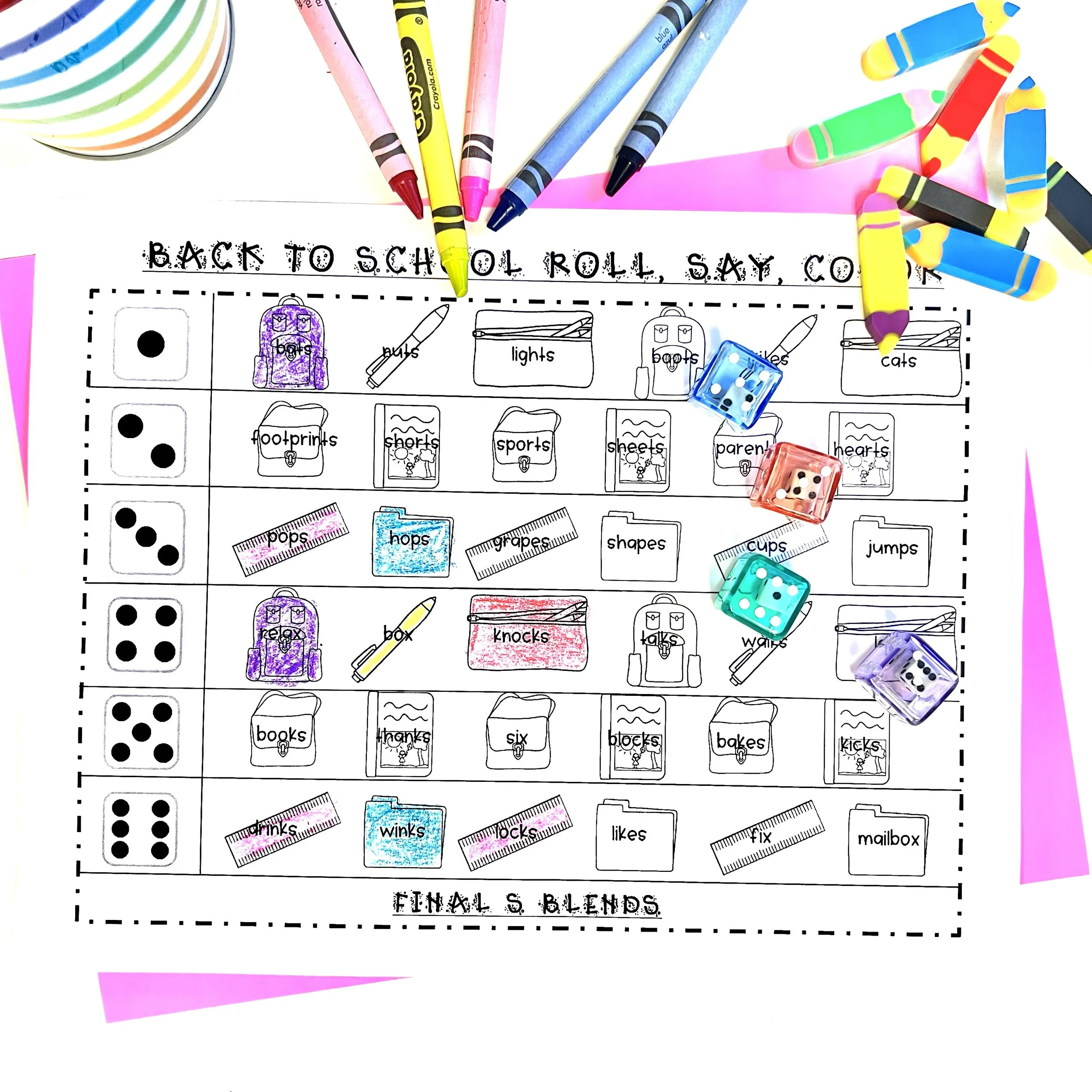
Double-dice are a favorite for all students! These dice are perfect for Roll and Color Articulation Worksheets as they turn any worksheet into a game for lots of practice.
The larger, outside dice tells the kids what row to go to and the inside dice tells them the number of repetitions.
Double-Dice can be purchased here on Amazon (affiliate link)

Dry-erase dice allow you to add another skill to any speech and language activity!
Use dice to add phonological awareness and phonemic awareness activities to your articulation therapy as supported by the Science of Reading.
Students can generate a rhyming word for their target, change the initial or final sound to another or create a compound word, just to name a few.
Using Dice in Language Activities
Add dice to your language lessons in speech therapy to work on grammar skills, story narration, comprehension, and sequencing.
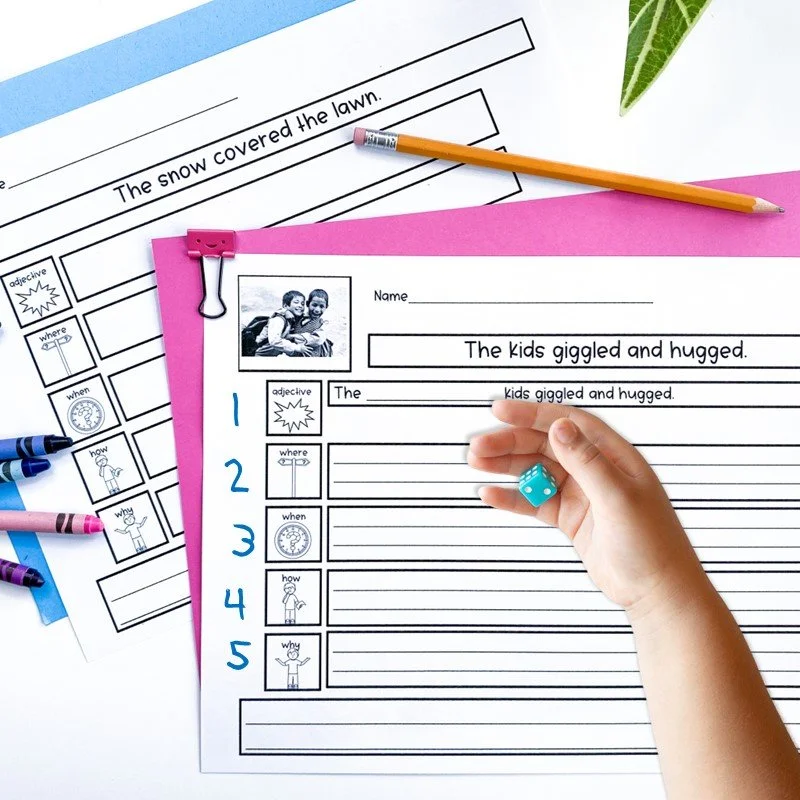
Sentence formulation
For students working on descriptive sentence formulation, you can add dice to tell them which part of the sentence to add as they build complex and compound sentences.
Story sequencing and retelling
Add story elements to dice for students to work on retelling a story
adding Wh question words to dice allows students to practice answering comprehension questions too.
Narrative language
Using Rory Story Cubes (affiliate link) makes a great no-prep language activity to work on sentence-building and narrative language.
Kids love the silly sentences and stories they can create using the image dice!
These story dice allow for open-ended language activities and creativity!
Using Dice in Social Skills Activities for Kids
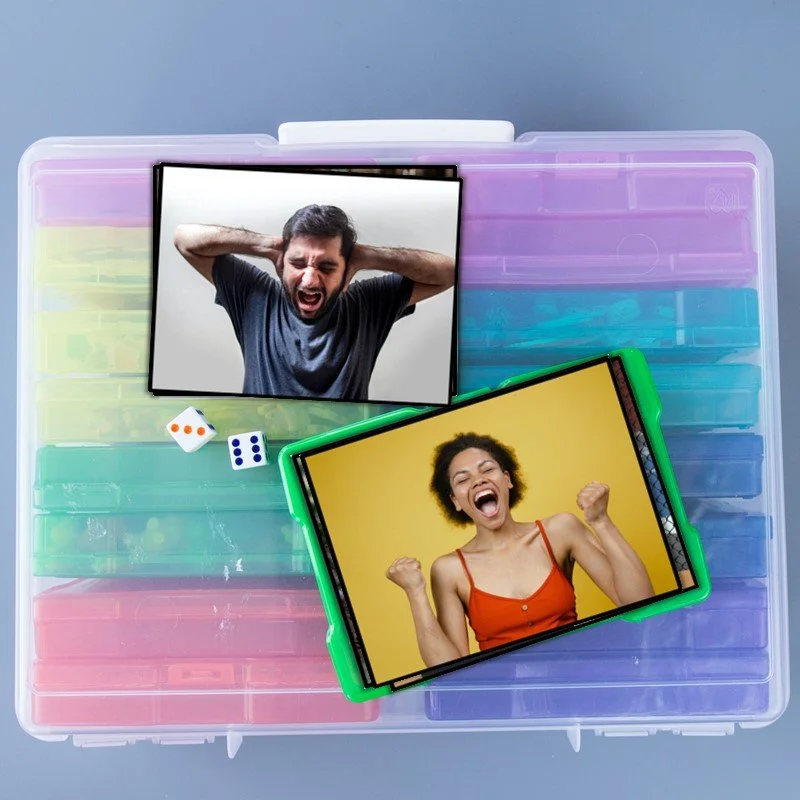
Improve feelings identification and emotional understanding. Put an emotion on a dry-erase dice and have students can act it out, explain a time they may feel that way, or
Give students a photo and have them generate a list of reasons the person could be feeling that way equal to the number they roll.
If you avoid dice because they never stay on the table try these ideas:
Put small dice inside a clear Easter egg or container and shake that.
Place larger dice inside a bin to shake.
Use digital dice
Toy Theatre offers seven types and you can set how many you need.
