

10 Things That Will Make Your Life Easier as a School Speech Therapist
This post is written to help speech therapists working in schools with 10 speech therapy tips for caseload management, organization, IEP paperwork, and speech therapy activities.

10 Speech Therapy Tips to Help with IEPs, Caseload Management, and Therapy Activities
Being a school-based speech therapist seems to get more and more challenging every year.
As a public school speech therapist, you are asked to do more with less, while continuing to meet the ever-growing needs of your students.
With growing caseload sizes, we need to work efficiently!
While that is easier said than done, here are 10 actionable tips that make your life easier as a school-based SLP!
Reduce your stress by implementing 1, 2, or all of these speech therapy tips!
10 Tips that will make your life easier as an SLP in the schools!
INCLUDING FREEBIES FOR YOU!
1. USE DIGITAL SYSTEMS
Digital systems can be accessed anywhere at any time!
If you could not get into your office for months, would your therapy and paperwork remain seamless?
This can happen. A school in my district had a fire. The section of the school containing the speech office was closed off for months. The therapist could not access any of her files!
Imagine doing progress reports without any of your data or therapy notes! Go digital!
Digital Systems keep all the IEP data in one spot.
When you are organized you are more efficient. No wasted time looking for misplaced documents.
2. KEEP A CASELOAD SPREADSHEET
Spreadsheets organize due dates.
A spreadsheet is easily updated throughout the year.
No need to create a brand new one year to year.
GET A FREE SPEECH THERAPY CASELOAD ORGANIZATION SYSTEM HERE
3. USE TEMPLATES
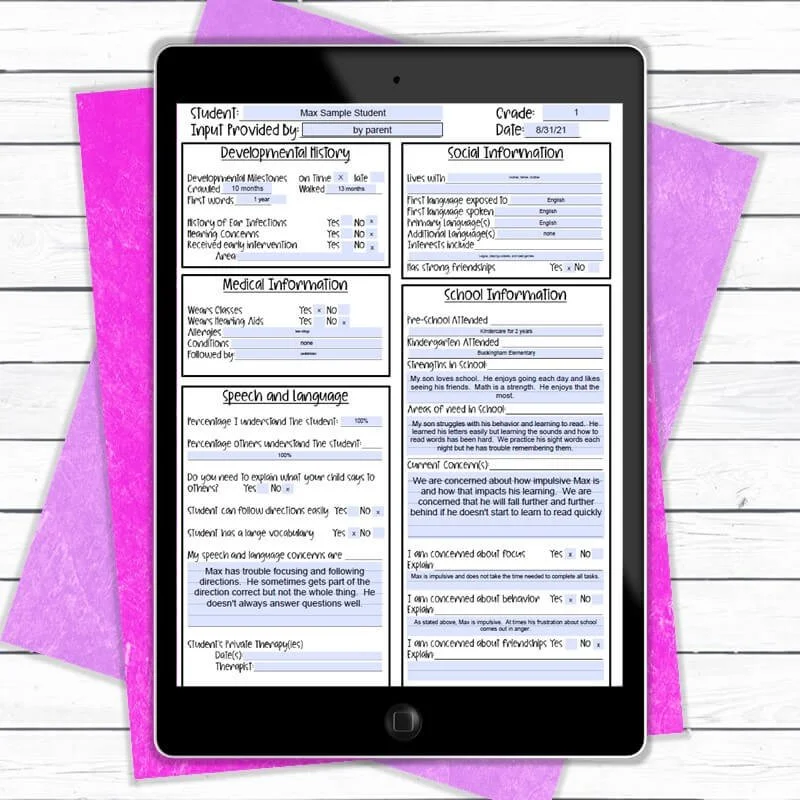
Tweaking template language takes less time than starting from scratch.
Create templates of the commonly used language for your paperwork.
Parent Case History and Teacher Input to the IEP are great places for templates.
Keeping a speech and language goal bank of commonly used goals will save you time.
4. USE DIGITAL SPEECH THERAPY DATA SHEETS
Spreadsheets can do some of the work for you.
Auto-fill data for your speech therapy progress reports.
Graphed data easily integrate.
Easy to use from year to year without starting over.

5. EMBRACE MIXED GROUPS

No matter how hard you try to avoid mixed groups, you will eventually get them.
As IEPs are revised and updated, groups that were once homogeneous will eventually be mixed.
When scheduling, think not only about students’ current goals but also about what goals they may need at their annual IEP!
If you think of future goals, you will look at groups differently.
Use no-prep materials that include both articulation and language targets.
Mixed Group worksheets provide differentiated instruction while each student feels like they are working on the same thing.
GET MIXED GROUPS FREEBIE
6. WRITE MEASURABLE IEP GOALS
Think of IEP goals as a blueprint, not an exhaustive list
Would you rather a student have 2 goals that they master or have 4 goals and none get mastered?
Mastering 2 skills are always better than making some progress on more but not being proficient in them.
Not every area of need should be a goal.
The more goals you write, the more you need to progress monitor.
7. COLLECT QUANTITATIVE BASELINE DATA
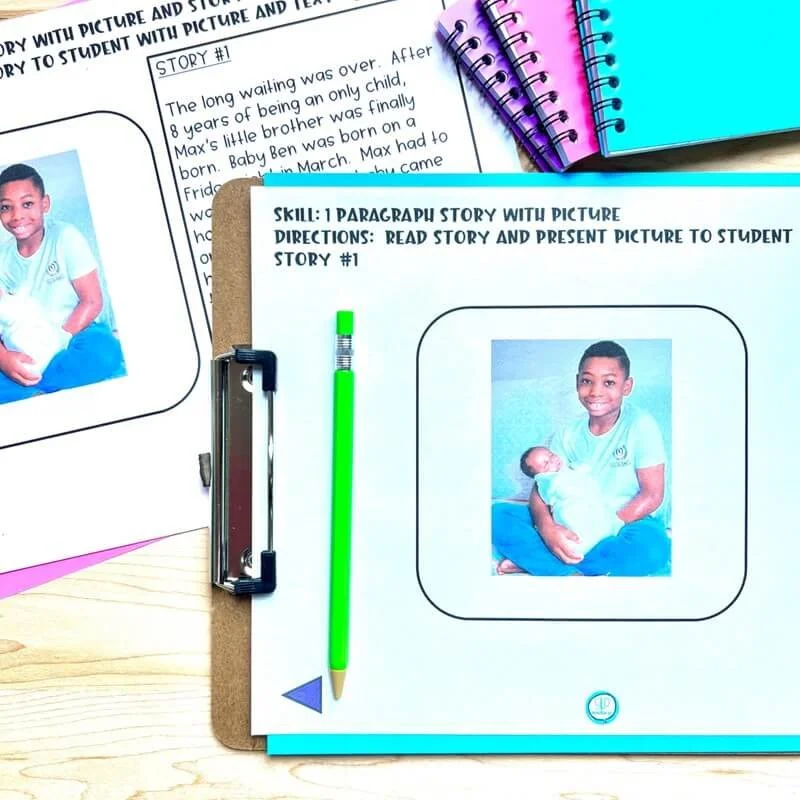
A goal’s strength starts with a clear, quantitative baseline.
The only way to know where you are going is to know where you started.
Baseline data needs to be written throughout an IEPs present levels of performance.
Baselines can be percentages, the number of trials/total, a rating scale, a rubric score, and 1st trial data.
8. USE DATA COLLECTION PROBES TO COLLECT BASELINES AND PROGRESS MONITOR GOALS
Using speech therapy data probes allows you to measure true IEP goal progress.
Compares the goal baseline to the monthly performance.
The probe you use to determine a baseline, you re-administer for progress monitoring.
Re-administered on a set interval.
READ MORE ABOUT DATA COLLECTION HERE
9. USE EMAIL READ RECEIPTS WHEN SHARING IEPS WITH THE TEAM
Have you ever had an angry parent when they feel their child’s IEP is not being followed? Documentation, documentation, documentation!
Sharing an IEP via email with a read receipt confirms you shared the IEP with a teacher.
10. WHEN A STUDENT IS ADDED TO YOUR CASELOAD, ASK YOURSELF ‘WHO IS READY FOR DISCHARGE?’
I saved the best tip for last!
Actively managing your caseload size IS a part of your job.
Your time to provide therapy to students is limited.
Think of it like a revolving door, while someone spins in, someone spins out.
If you can’t discharge someone, look to reduce the amount of someone’s time.
WHICH OF THESE TIPS WILL YOU START USING?
Comment below and let me know. Don’t forget to grab your freebie.