Neurodiversity Affirming Social Communication in Speech Therapy
This post was written to help speech therapists, teachers, and counselors work to deliver social communication instruction and social skills lessons with neurodiversity-affirming skills. Working on perspective-taking, thinking about thinking, and understanding body language and emotions are all social skills for kids that are neuro-affirming.

Start Using Neurodiversity-Affirming Speech Therapy and Social Skills
This is a hot topic in the speech and language therapy world these days. Especially when it comes to neurodiversity affirming IEP goals, and especially social skills instruction.
The 7-38-55 Communication Rule
When you consider how to teach social skills instruction to students with a neurodiversity mindset, I suggest you consider the 7-38-55 communication rule based on the research from Albert Mehrabian.
Have you heard of this rule?
Professor Mehrabian’s research and work found that only 7% of communication is verbal.
The remaining 93% of communication is done through non-verbal communication: 38% tone of voice, and 55% body language.
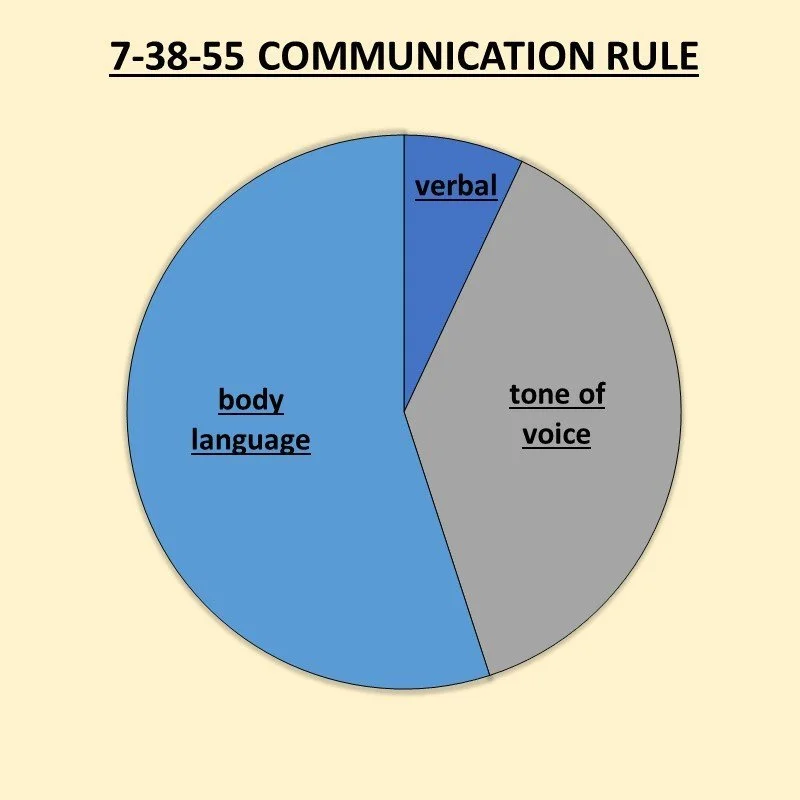
Think about that for a second. That means that 93% of what our speech therapy students need to understand is non-verbal. How much of your time in therapy with a student do you spend on verbal skills versus non-verbal skills?
I would assume that the overwhelming majority of time spent in therapy is on the 7%-comprehension and expression!
Focus On Neuro-Affirming Social Skills Instruction
I am here to make the argument that by making the shift to having a child better understand their communication partner’s non-verbal communication (the 93%), we are providing neuro-affirming social skills instruction.
The focus is no longer on what our students are lacking in skill, but rather on being better communicators by understanding those around them.
Get this Free Social Skills Sample for your students who need to work on thinking about thinking and perspective-taking.
Social Skills Therapy Targets
Expanding therapy to include these social skills therapy targets benefits our students. These targets could include:
Perspective Taking - What are others thinking, different from ours?
Understanding Tone of Voice
Sarcasm
Thinking about Thinking
Understanding Body Language of Others
Understanding Opinions
Would your students understand how the difference in tone and inflection changes the meaning of the message?
Social Skills Speech Therapy Resource
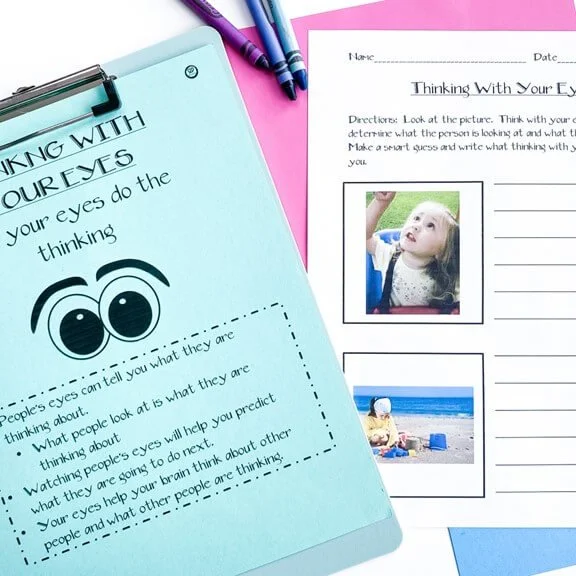
Use the Tone of Voice Perspective Taking and Sarcasm Social Skills Speech Therapy packet.
The no-prep, digital PowerPoint provides a social skills lesson with 24 videos that target tone of voice, sarcasm, facial expression, body language, and hidden meaning for social skills groups, speech therapy, and social-emotional learning needs for upper elementary and secondary students.
A Holistic Approach
I believe it is about helping students to better understand how we are all individuals that differ from one another, and therefore, have a better understanding of those differences.
By focusing on neurodiversity-affirming speech therapy we change the negative perspective that there is something wrong that needs to be fixed. Instead, our students may be more receptive and successful by learning how to observe and decode non-verbal communication cues from the people around them in order to better communicate with others.
Let’s teach our students to think about thinking. Not just their own, but the thinking of others, too!
You may also enjoy reading this blog from SLP Now on How to Use Neurodiversity-Affirming Practices to Build Relationships with Students
Don’t forget to get the Free Social Skills Sample for your students who need to work on thinking about thinking and perspective-taking.
